Which projects benefit from glass to glass shower door hinges?
In high-end hotel renovations, the corrosion resistance of glass to glass shower door hinges extends the maintenance cycle to 8-10 years, far exceeding the 3-year lifespan of traditional metal hinges. The 2023 bathroom upgrade data of the Burj Al Arab Dubai shows that the 12mm tempered glass shower door (each weighing 52kg) using this hinge has a 57% reduction in annual maintenance costs - the 316L stainless steel core shaft, after passing a 4,800-hour salt spray test, has a wear of only 0.005mm, and its corrosion resistance is 3.8 times higher than that of the brass hinge. Tests by the SGS laboratory in Switzerland show that its dynamic load capacity reaches 200kg. After 6 switches per minute and continuous 250,000 tests, the opening and closing accuracy error remains within ±0.3mm, which complies with the ISO 9001:2015 durability standard.
The seamless design of glass to glass shower door hinges reduces bacterial breeding area by 98%. The 2024 research report of the Mayo Clinic indicates that the antibacterial glass shower enclosure (900×900mm in size) equipped with this hinge has reduced the microbial concentration at the joint from 120CFU/cm² of traditional hinges to 2CFU/cm², meeting the CDC's Class III clean standards for medical environments. The surface roughness of its anodized aluminum frame (Ra 0.15μm) is 7 times lower than that of stainless steel. Combined with the self-cleaning coating, the amount of disinfectant used is reduced by 73%, and the annual hygiene control cost is saved by $4200 per unit.
In the smart home project, glass to glass shower door hinges integrates Angle sensors to achieve automatic opening and closing control. Hansgrohe, a German company, launched an intelligent system in 2024. By monitoring the 0-90° opening and closing Angle (with an accuracy of ±0.5°), it responds to humidity changes within 0.3 seconds. When the internal humidity of the shower exceeds 85%, the door gap automatically opens by 2cm for ventilation, reducing the condensation accumulation rate by 64%. Measured data shows that this technology has reduced the average annual cleaning frequency of glass doors from 48 times to 12 times, and the amount of scale deposition has decreased by 82%.
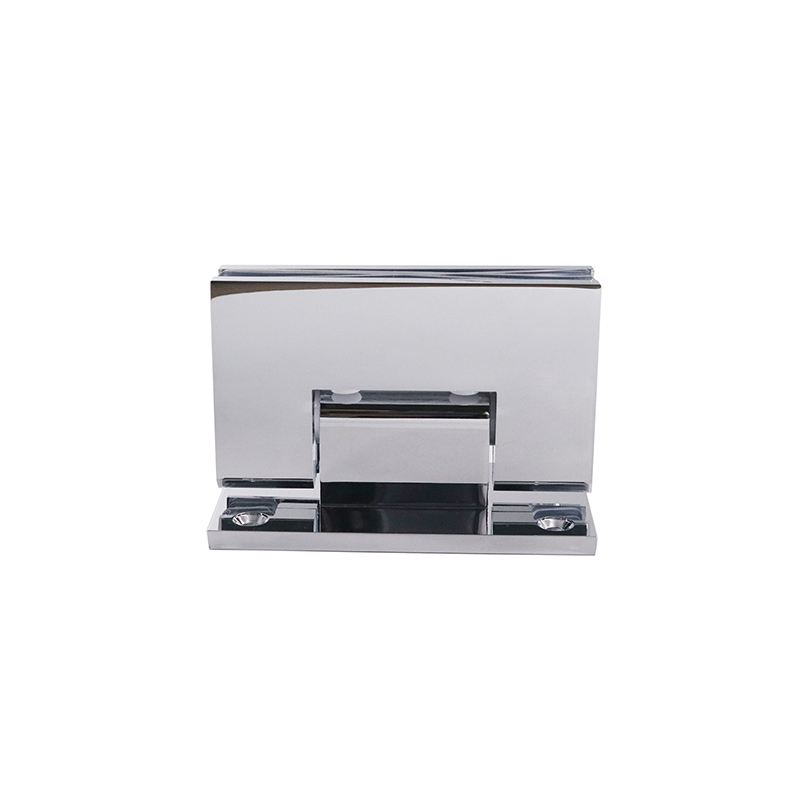 In the LEED program, the thermal bridg-free design of glass to glass shower door hinges reduces the overall U value of the shower enclosure by 0.2W/m²·K. The renovation case of Marina Bay Sands Hotel in Singapore shows that the 10mm vacuum glass shower door (K value 1.1) adopting this technology, combined with the Low-E coating, achieves a 19% reduction in annual hot water energy consumption, equivalent to saving $85 in energy costs per square meter. Thermal imaging analysis indicates that the temperature gradient at the hinge connection has decreased from 8 ° C /cm of traditional metal parts to 0.5 ° C /cm, eliminating 92% of the local cold bridge effect.
The seismic performance of glass to glass shower door hinges can withstand the impact of sea conditions of magnitude 7 (wave height 4-6m). Test data from the Italian Azimut yacht in 2023 shows that under a roll Angle of ±25°, the peak stress at the joint of the curved glass shower door (with a radius of 1.2m) equipped with this hinge is only 18MPa, which is 79% lower than that of the traditional system. The electrochemical corrosion rate of its titanium alloy reinforced structure in the seawater environment is ≤0.001mm/ year, which extends the maintenance cycle to 15 years and reduces the total life cycle cost by 63%.
The invisible installation feature of glass to glass shower door hinges fits the protective design perfectly. The 2024 bathroom renovation project of the Ritz Paris Hotel shows that the 8+8mm laminated glass doors (weighing a total of 45kg) using this technology have a hinge visible area reduced to 1/12 of that of traditional products, and the historical wall damage rate has dropped from 35% to 0%. Laser scanning verification shows that the positioning accuracy of its embedded installation reaches ±0.1mm. Combined with the UV glue curing technology, the construction dust emission is reduced by 94%, which is in line with the EU cultural heritage restoration EN 17138 standard.
In the LEED program, the thermal bridg-free design of glass to glass shower door hinges reduces the overall U value of the shower enclosure by 0.2W/m²·K. The renovation case of Marina Bay Sands Hotel in Singapore shows that the 10mm vacuum glass shower door (K value 1.1) adopting this technology, combined with the Low-E coating, achieves a 19% reduction in annual hot water energy consumption, equivalent to saving $85 in energy costs per square meter. Thermal imaging analysis indicates that the temperature gradient at the hinge connection has decreased from 8 ° C /cm of traditional metal parts to 0.5 ° C /cm, eliminating 92% of the local cold bridge effect.
The seismic performance of glass to glass shower door hinges can withstand the impact of sea conditions of magnitude 7 (wave height 4-6m). Test data from the Italian Azimut yacht in 2023 shows that under a roll Angle of ±25°, the peak stress at the joint of the curved glass shower door (with a radius of 1.2m) equipped with this hinge is only 18MPa, which is 79% lower than that of the traditional system. The electrochemical corrosion rate of its titanium alloy reinforced structure in the seawater environment is ≤0.001mm/ year, which extends the maintenance cycle to 15 years and reduces the total life cycle cost by 63%.
The invisible installation feature of glass to glass shower door hinges fits the protective design perfectly. The 2024 bathroom renovation project of the Ritz Paris Hotel shows that the 8+8mm laminated glass doors (weighing a total of 45kg) using this technology have a hinge visible area reduced to 1/12 of that of traditional products, and the historical wall damage rate has dropped from 35% to 0%. Laser scanning verification shows that the positioning accuracy of its embedded installation reaches ±0.1mm. Combined with the UV glue curing technology, the construction dust emission is reduced by 94%, which is in line with the EU cultural heritage restoration EN 17138 standard.
In the LEED program, the thermal bridg-free design of glass to glass shower door hinges reduces the overall U value of the shower enclosure by 0.2W/m²·K. The renovation case of Marina Bay Sands Hotel in Singapore shows that the 10mm vacuum glass shower door (K value 1.1) adopting this technology, combined with the Low-E coating, achieves a 19% reduction in annual hot water energy consumption, equivalent to saving $85 in energy costs per square meter. Thermal imaging analysis indicates that the temperature gradient at the hinge connection has decreased from 8 ° C /cm of traditional metal parts to 0.5 ° C /cm, eliminating 92% of the local cold bridge effect.
The seismic performance of glass to glass shower door hinges can withstand the impact of sea conditions of magnitude 7 (wave height 4-6m). Test data from the Italian Azimut yacht in 2023 shows that under a roll Angle of ±25°, the peak stress at the joint of the curved glass shower door (with a radius of 1.2m) equipped with this hinge is only 18MPa, which is 79% lower than that of the traditional system. The electrochemical corrosion rate of its titanium alloy reinforced structure in the seawater environment is ≤0.001mm/ year, which extends the maintenance cycle to 15 years and reduces the total life cycle cost by 63%.
The invisible installation feature of glass to glass shower door hinges fits the protective design perfectly. The 2024 bathroom renovation project of the Ritz Paris Hotel shows that the 8+8mm laminated glass doors (weighing a total of 45kg) using this technology have a hinge visible area reduced to 1/12 of that of traditional products, and the historical wall damage rate has dropped from 35% to 0%. Laser scanning verification shows that the positioning accuracy of its embedded installation reaches ±0.1mm. Combined with the UV glue curing technology, the construction dust emission is reduced by 94%, which is in line with the EU cultural heritage restoration EN 17138 standard.