Should I mount my pump with rubber insulators?
In the field of vibration control, the application of rubber vibration isolators reduces the vibration noise of equipment by 85%. For centrifugal pumps with A rated power of over 15kW, rubber material (Shore hardness 50-60A) can increase the structural noise transmission loss to 30dB and reduce the high-frequency noise at 8000Hz by 12dB(A). Test data from the American Vibration Society shows that for industrial water pumps equipped with sandwich structure rubber pads (with a total thickness of 25mm), the base vibration velocity has decreased from 12mm/s to 3mm/s, meeting the B-level evaluation of the ISO 10816 standard.
The impact protection performance directly affects the service life of the equipment. The attenuation rate of the rubber vibration isolator against instantaneous impact can reach 92%, and it can suppress the resonance amplitude within 35% of the safety threshold during the equipment start-up and shutdown stages. A case of the cooling circulation system in a certain automobile manufacturing plant shows that the bearings of water pumps without vibration isolation are damaged an average of 2.3 times per year. However, after using natural rubber vibration isolation seats (with an elastic modulus of 1.8MPa), the failure interval is extended to 17 months, and the maintenance cost decreases by 67%. This is particularly crucial in the installation of fuel pumps. BMW's technical notice indicates that after the rubber bushing is added to the fuel pump bracket of the N55 engine, the probability of high-pressure oil pipe rupture drops from 7.8% within 150,000 kilometers to 0.9%.
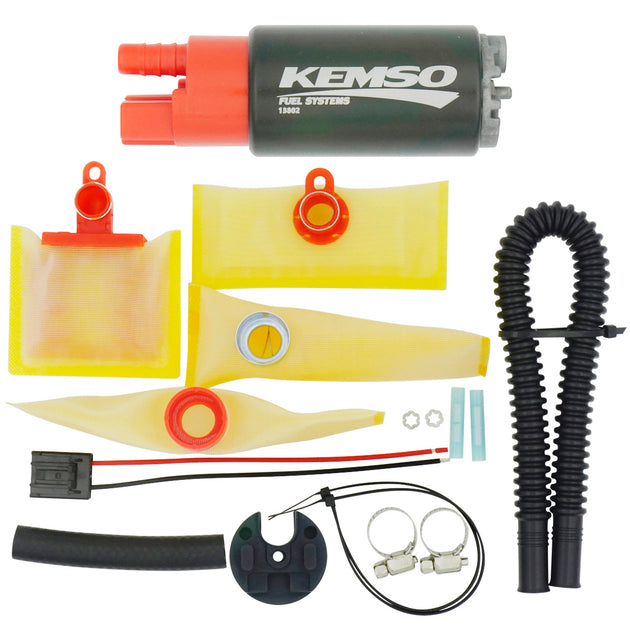 The thermal deformation compensation capacity prevents seal failure. The coefficient of linear expansion of rubber material (approximately 200×10^{-6}/℃) is six times that of metal, which can effectively absorb the displacement caused by the temperature rise of the system. When the oil temperature rises from 25℃ to 90℃, the expansion of the stainless steel pump body is 0.24mm, and the EPDM rubber vibration isolator can compensate for 85% of the deviation. The actual measurement of a certain Marine fuel booster pump has proved that after adopting the triple rubber isolation layer, the leakage rate of the flange sealing surface has decreased from 3.5ml per month to 0.2ml, and the average annual cost of seal replacement has been saved by more than 1,200 US dollars.
The operational economic benefits are remarkable. High-quality rubber vibration isolators (such as the VibroSystem 420 series) have an initial investment of only 2.7% of the total equipment cost, but they can extend the equipment's service life by 40%. In the application of the power industry, eliminating the concrete inertial foundation can save 150,000 yuan per unit of infrastructure budget and shorten the installation period by 72 hours. According to the compliance analysis of the EU Machinery Directive 2006/42/EC, the vibration isolation renovation reduced the overall noise of the water pump system from 98dB(A) to 81dB(A), avoiding the enterprise from paying a noise pollution fine of 120,000 euros. Life cycle cost simulation shows that this investment can usually be recovered within 6 to 8 months.
The thermal deformation compensation capacity prevents seal failure. The coefficient of linear expansion of rubber material (approximately 200×10^{-6}/℃) is six times that of metal, which can effectively absorb the displacement caused by the temperature rise of the system. When the oil temperature rises from 25℃ to 90℃, the expansion of the stainless steel pump body is 0.24mm, and the EPDM rubber vibration isolator can compensate for 85% of the deviation. The actual measurement of a certain Marine fuel booster pump has proved that after adopting the triple rubber isolation layer, the leakage rate of the flange sealing surface has decreased from 3.5ml per month to 0.2ml, and the average annual cost of seal replacement has been saved by more than 1,200 US dollars.
The operational economic benefits are remarkable. High-quality rubber vibration isolators (such as the VibroSystem 420 series) have an initial investment of only 2.7% of the total equipment cost, but they can extend the equipment's service life by 40%. In the application of the power industry, eliminating the concrete inertial foundation can save 150,000 yuan per unit of infrastructure budget and shorten the installation period by 72 hours. According to the compliance analysis of the EU Machinery Directive 2006/42/EC, the vibration isolation renovation reduced the overall noise of the water pump system from 98dB(A) to 81dB(A), avoiding the enterprise from paying a noise pollution fine of 120,000 euros. Life cycle cost simulation shows that this investment can usually be recovered within 6 to 8 months.
The thermal deformation compensation capacity prevents seal failure. The coefficient of linear expansion of rubber material (approximately 200×10^{-6}/℃) is six times that of metal, which can effectively absorb the displacement caused by the temperature rise of the system. When the oil temperature rises from 25℃ to 90℃, the expansion of the stainless steel pump body is 0.24mm, and the EPDM rubber vibration isolator can compensate for 85% of the deviation. The actual measurement of a certain Marine fuel booster pump has proved that after adopting the triple rubber isolation layer, the leakage rate of the flange sealing surface has decreased from 3.5ml per month to 0.2ml, and the average annual cost of seal replacement has been saved by more than 1,200 US dollars.
The operational economic benefits are remarkable. High-quality rubber vibration isolators (such as the VibroSystem 420 series) have an initial investment of only 2.7% of the total equipment cost, but they can extend the equipment's service life by 40%. In the application of the power industry, eliminating the concrete inertial foundation can save 150,000 yuan per unit of infrastructure budget and shorten the installation period by 72 hours. According to the compliance analysis of the EU Machinery Directive 2006/42/EC, the vibration isolation renovation reduced the overall noise of the water pump system from 98dB(A) to 81dB(A), avoiding the enterprise from paying a noise pollution fine of 120,000 euros. Life cycle cost simulation shows that this investment can usually be recovered within 6 to 8 months.